Write a loose outline using simple, conversational language and contractions, then speak naturally rather than reading word-for-word.
How to Create Engaging Voiceover Content: Tips for Daily Creators
 Written By Gitika Chadha
 Reviewed By: Khushi Choudhary
If you are a content creator or trying to post on Instagram, TikTok, YouTube Shorts, or create short videos for your business, using voiceovers can enhance your video content and maintain engagement. Voiceovers can add a new language to the content by simplifying it and giving personality to the viewers so they can watch it during their skincare routines. There are so many content formats, such as GRWM or fashion influencer content, and tutorial videos.
Well, you don’t have to be a pro in content creation or have a lot of experience to create voiceover contents which people can enjoy. For a perfect voiceover, you just need a simple trick: stay conversational, do not try to make it sound like a script, and see the magic.
In this article, I will give you some practical tips to enhance your voiceover content and make it user-friendly.
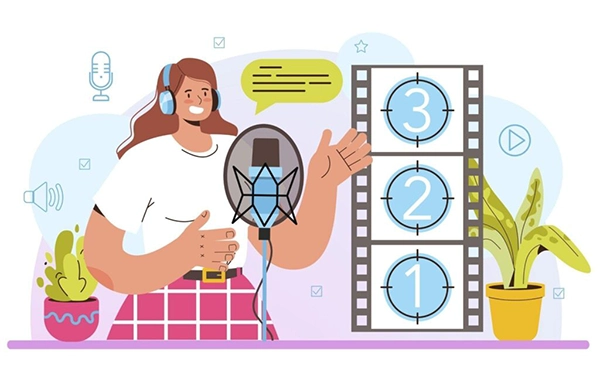
Start with the Right Tools
Good content starts long before you hit the record button. First, you need to make sure you have the right audio recording tools to capture clear voiceover for your content. This means investing in:
- A good USB or XLR condenser microphone
- An audio interface (if using XLR)
- A pop filter
- A mic stand or boom arm
- Closed-back headphones
- Basic acoustic treatment for your studio space
Alongside these hardware and equipment essentials, you need a few software tools as well (i.e., mixing studios, video editing tools, AI tools, etc.).
Pro tip: These days, plenty of creators use a text to speech AI tool for explainer videos, product demos, educational content, or quick social posts. If used correctly these tools can give you a really good, consistent, and very professional-sounding voiceover. The convenience of AI-generated voiceovers can also help creators post more frequently without demanding too much time.
Write Like You Actually Speak
If you sound like you are reading an essay, people are most likely to scroll past your content because, honestly, who wants to listen to a script? People don’t speak the way they write. We pause, change direction halfway through a sentence, throw in little expressions here and there, and basically just keep things wonderfully imperfect. That’s exactly what makes voiceovers feel genuine.
This is actually a good thing because creators don’t need to overly rehearse their voiceover content in order to produce quality outputs. Your viewers will keep watching your content because it has personality, so just do what you can to retain your authentic personality in your VOs.
A good rule of thumb here is to try saying the words out loud before you write them down. Or better still, just speak directly into the microphone, script-free. If you’re worried about stammers ruining a whole take, then just record in segments. Most of the time, short and simple is best anyway.
Contractions also help. “You’ll” sounds more natural than “you will.” “It’s” generally feels friendlier than “it is.” Tiny changes like these make a surprisingly big difference. And if you find yourself stumbling across a word while practising, don’t force it. Rewrite or rephrase the sentence instead.
Hook People in the First Few Seconds
Social media is optimised for scrolling, not watching, so viewer attention spans are naturally a precious commodity. So it goes without saying that the last thing you want to do is bore someone. Most viewers will have made up their minds to stay or go in the first few seconds of your video content, which means your opening line has to do some seriously heavy lifting.
Rather than starting with “Hi everyone, today I’m going to talk about…”, jump straight into something useful. Ask an interesting question. Lead with a surprising fact. Mention a common shared issue or poke immediate fun at an intriguing mistake. Whichever route you choose, just make sure you grab the viewer’s attention in the first few seconds.
But it doesn’t stop there. Once you’ve piqued that curiosity, you need to keep building on it so that someone doesn’t scroll past. The best way is to give them a reason to stay until the end instead of revealing absolutely everything in the first sentence.
A good rule to follow: every line should gently encourage your viewers to keep watching. Build on the intrigue and value of your story throughout your content.
Let Your Personality Shine
It sounds harsh, but if you want to create engaging voiceover content, you’ll need to bypass the generic. The internet already has a lot of content that sounds similar, so no one’s going to tune in if you’re just producing a copy-paste of what everyone else is already doing.
People often return because they didn’t just enjoy the content, but they also enjoyed the creator. In an ocean of similar videos, it’s only your unique personality that can make the difference. That doesn’t mean you should try to become louder or more energetic if that’s not who you are. If you’re naturally calm, lean into that. If you’ve got a dry sense of humour, use it. If you’re enthusiastic about your niche, let that excitement come through.
Small personal observations, everyday expressions, and genuine reactions can make your audience feel like they’re hearing from an actual person. And if something takes an unexpected turn or doesn’t go as planned, just be honest about it. Those sorts of moments are far more relatable than trying to appear flawless all the time. And who knows? If you can master the art of being confidently imperfect in your VOs, you may even be brave enough to go live on TikTok someday!
Find a Natural Pace
Speaking too fast is one of the most common mistakes creators make, but It’s understandable. Because when you’re recording, everything feels slower than it actually is, that’s why so many people rush through their script without even realising it.
In reality, listeners need small pauses to absorb what you’re saying. So, make sure to slow down slightly between ideas. It’s also important to emphasise important words clearly instead of racing through every sentence at the same speed. Allowing for short pauses after key points also gives viewers a chance to process the information thoroughly.
If you’re using AI-generated narration, spend a little time adjusting the pacing until it sounds conversational rather than mechanical. Most programs let you adjust the speed and pause times, and this can dramatically improve the final result.
Record at a relaxed pace to make your content feel more confident. There’s no point in trying to force all your thoughts into a thirty-second window if it leaves the listener struggling to keep up.
Edit for Clarity, Not Perfection
Creators have this huge tendency to chase perfection. Honestly, this is normal, but don’t put something out there that people will forget after just a few seconds. Meanwhile, someone else uploads a good video, learns from it, and posts another one tomorrow.
Editing should focus on making your message easier to understand rather than removing every tiny breath or pause. Trim unnecessary repetition, remove parts that stray from the main subject, and balance your audio levels so everything is easy to hear. If background music competes with your voice, turn it down. It’s that simple, and there’s no need to overthink it.
The best thing you can do is to watch the video from start to finish before publishing. You’ll often spot a confusing sentence or awkward transition that wasn’t obvious while editing. Remember, viewers care far more about whether your content is useful or entertaining than whether every sentence was recorded in one flawless take.
Consistency almost always beats perfection.
Final Thoughts
Creating an engaging voiceover isn’t about having the best voice or the priciest recording tools. It’s essentially just about getting your message across in a way that makes sense and looks like you’re really talking to the listener face-to-face.
Start with tools that make your workflow easier, write a script just like you talk to others, capture attention early, and don’t be afraid to let your personality come through. The more you create, the more natural it becomes. Every recording teaches you something new, and over time you’ll develop a voice that’s recognisable, engaging, and unmistakably your own.
Frequently Asked Questions
Should I use a script or improvise my voiceovers?
How do I capture viewer attention in the first few seconds?
Skip formal introductions and open immediately with an engaging question, a surprising fact, or a common problem.
Are AI-generated voiceovers effective for video content?
Yes, for explainer videos and quick posts, provided you adjust the speed and pause times so the narration sounds natural.
Gitika ChadhaGitika is a content and social media strategist with over 3 years of experience. At Influencersplace, she writes blogs using her influencer marketing knowledge and social media strategies. Other than this, she also has the capability of making the content more user-friendly with her knowledge of SEO. With her skills, she has worked for the recognized brands, including OLA and Paytm.
Related Posts