

A good ROI depends on your campaign goals, industry, and investment. Here, positive ROI means the campaign generates more revenue than it costs.
What is Influencer Marketing ROI and How to Calculate It?
 Written By Nitin Rathore
 Reviewed By: Minal Thakur
Influencer marketing has emerged as one of the most effective and authentic forms of marketing in the mid 2020s. With its broad marketing approach, it has gained massive popularity. The key values of influencer marketing are influencer marketing ROI and campaign performance.
Through this blog, we will analyse how to calculate ROI, track, and improve influencer marketing performance.
Quick Answer:
Measure influencer marketing ROI by tracking the revenue, conversions, engagement, and website traffic generated by the campaign.Use the formula: ROI = (Revenue − Campaign Cost) ÷ Campaign Cost × 100.
What is Influencer Marketing ROI?
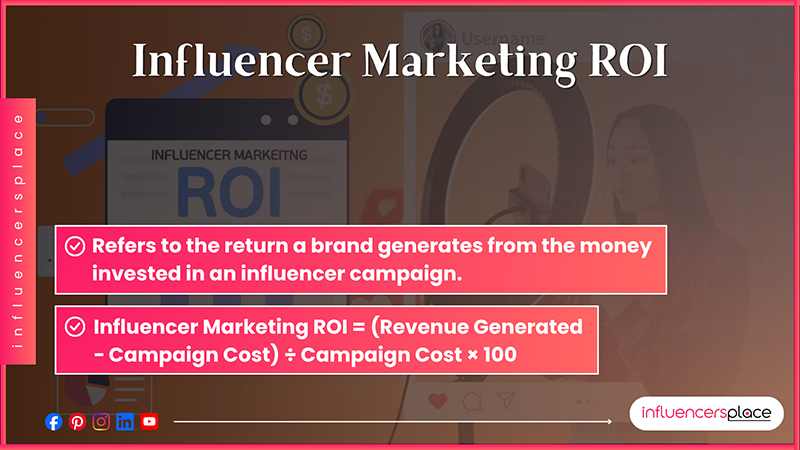
Influencer marketing ROI, in simple terms, refers to the return a brand generates from the money invested in an influencer campaign. It helps you compare the revenue generated by a campaign with its overall cost.
The formula used to calculate ROI is:
Influencer Marketing ROI = (Revenue Generated − Campaign Cost) ÷ Campaign Cost × 100
Let us understand the concept through an illustration:
Suppose you are a brand with a budget of ₹2 lakh that you have set aside for influencer marketing campaign. If the campaign generates ₹6 lakh in revenue, your ROI would be 200%. However, revenue is not the only factor to consider. Reach, engagement, website traffic, leads, and user generated content can also help you measure the overall success of your campaign.
Why is Measuring Influencer Marketing ROI Important?

Measuring influencer marketing ROI is important as it helps brands determine whether their influencer partnerships are delivering the expected results. It also shows which creators, content formats, and platforms are performing the best and yielding the most results.
The process may also contribute to the following:
- Understanding whether your campaign is profitable by comparing the revenue, conversions, or business value generated with the total amount invested.
- Identifying high performing influencers based on meaningful results such as engagement, website traffic, leads, conversions, and sales rather than follower count alone.
- Making better decisions about your marketing budget by determining which creators, platforms, content formats, and campaign strategies deliver the strongest returns.
- Comparing influencer campaigns with other marketing channels, including paid advertising, email marketing, search engine marketing, and organic social media.
- Improving future campaign strategies by identifying successful content themes, audience segments, posting schedules, and calls to action.
- Demonstrating the value of influencer marketing to stakeholders by presenting clear performance data, campaign outcomes, and financial results.
- Determining which products or services generate the strongest response when promoted through influencer partnerships.
- Setting more realistic campaign goals and benchmarking based on historical performance and industry results.
- Optimizing expenses by reducing investment in underperforming partnerships and increasing support for campaigns that consistently deliver results.
- Building stronger relationships with influencers by using performance data to create fair compensation structures and long term collaboration plans.
What Key Indicators Should You Track?

Revenue is considered one of the most important indicators, but it should not be the only one to monitor. The right indicators generally depend on your campaign goals.
Here’s a list of key indicators that you should keep in mind while tracking:
- Reach and Impressions: Reach measures the number of unique users who saw your influencer content, while impressions represent the total number of times the content was displayed. In simple words, a high reach indicates that your message reached a broader audience, while a high number of impressions may show that people viewed the content multiple times. Comparing reach and impressions can also help you assess how frequently your audience encountered the campaign.
- Engagement: Engagement includes likes, comments, shares, saves, replies, clicks, and other interactions. These actions show how actively audiences responded to the campaign rather than simply viewing it. Strong engagement can indicate that the content was relevant, entertaining, and useful.
- Website Traffic: Track visits from the posts of influencers to see if creators are directing people to your website. Use unique UTM (Urchin Tracking Module) links, landing pages, or trackable URLs for each influencer to see where visitors came from. Also, check metrics like time on page, pages viewed, bounce rate, and returning visitors to understand the quality of the traffic.
- Conversions: These may include purchases, registrations, downloads, newsletter sign ups, app installations, enquiries, or free trial requests. Tracking conversions helps you determine whether the campaign is producing meaningful business outcomes, not just awareness. You can measure conversion rates by comparing the number of completed actions with the number of clicks or visitors generated.
- Sales and Revenue: Use unique discount codes, links, or campaign specific landing pages to connect purchases with individual influencers. Track both the total revenue generated and the average order value to understand the campaign’s financial impact. Remember to account for refunds, discounts, product costs, and influencer fees when calculating the actual return.
- Follower Growth: A successful campaign may increase your brand’s social media following by introducing your business to new audiences. Monitor follower growth during and after the campaign, and compare it with your usual growth rate. Also evaluate whether these followers are relevant to your target audience.
How to Calculate Influencer Marketing ROI?
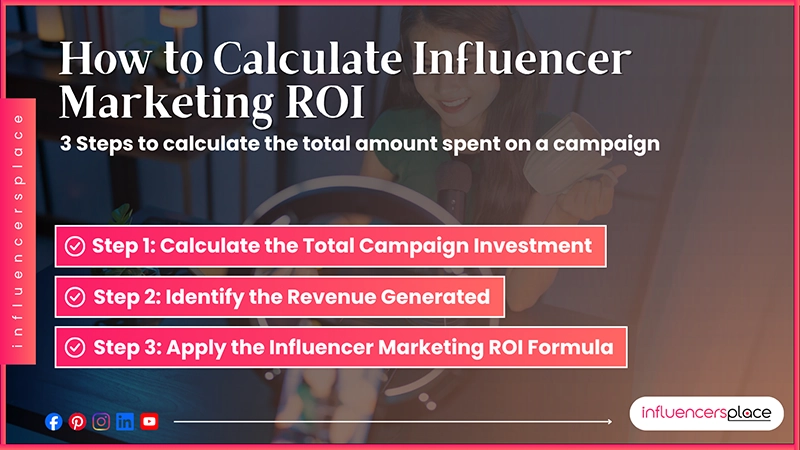
To calculate influencer marketing ROI, start by calculating the total amount spent on the campaign. Then, determine how much revenue can be directly assigned to the influencer campaign. Once you know the total campaign investment and the revenue generated, apply the standard ROI formula. Here’s everything you need to know in detail:
Step 1: Calculate the Total Campaign Investment
A complete calculation should include every direct and indirect cost associated with planning, producing, promoting, and managing the campaign.
Your total campaign investment may include:
- Influencer fee payments.
- Product samples, free products, or gifted services.
- Shipping, packaging, and fulfilment costs.
- Content production and photography expenses.
- Video editing, graphic design, or studio costs.
- Paid social media amplification.
- Affiliate commissions or performance bonuses.
- Agency, platform, or campaign management fees.
- Travel, event, or accommodation expenses.
- Discounts offered through influencer promo codes.
- Internal staff time spent managing the campaign.
Step 2: Identify the Revenue Generated
Calculate the revenue directly generated by the influencer campaign. The most dependable tracking methods include unique discount codes, affiliate links, dedicated campaign landing pages, and UTM (Urchin Tracking Module) tagged URLs.
When calculating revenue, decide whether you are measuring:
- Gross revenue before discounts and refunds.
- Net revenue after discounts, returns, and cancellations.
- Revenue generated during the campaign period.
- Revenue generated within a defined attribution window.
Step 3: Apply the Influencer Marketing ROI Formula
Once you know the total campaign investment and the revenue generated, use the standard ROI formula:
ROI = (Revenue − Investment) ÷ Investment × 100
The result is expressed as a percentage. A positive percentage means the campaign generated more revenue than it cost. A negative percentage, however, means the campaign did not recover its investment.
How to Track Influencer Campaign Performance?
There are certain ways through which you can track influencer campaign performance efficiently. These methods may include UTM links, unique promo codes, affiliate links, and campaign specific landing pages.
Here’s everything you need to know:
- Use UTM Links: Create a unique UTM tagged URL for each influencer to track clicks, website visits, and conversions generated from their content.
- Assign Unique Promo Codes: Give each influencer a different discount code to identify purchases and revenue generated through their audience.
- Track Affiliate Links: Affiliate links allow you to monitor clicks, sales, and commissions associated with each influencer.
- Monitor Social Media Analytics: Check reach, impressions, views, likes, comments, shares, saves, and engagement rates to measure audience response.
- Measure Website Traffic: Use analytics tools to see how much traffic influencers drive to your website and how visitors behave once they arrive.
- Track Conversions and Sales: Monitor purchases, sign ups, leads, downloads, or other actions that match your campaign objectives.
- Compare Influencer Performance: Compare creators based on engagement, conversions, revenue, and cost per result to identify your strongest partnerships.
- Review Results Against Goals: Finally, compare the collected data with your original campaign goals to determine whether the campaign was successful.
Tips to Improve Influencer Analytics

Influencer analytics can help you understand what is working and where your campaigns need constant improvement. According to my research, analysing multiple performance indicators and comparing them with your campaign goals is pretty effective.
Certain tips may include setting clear campaign goals, tracking relevant metrics, using unique tracking methods, and many more. Here’s everything you need to know:
- Set Clear Campaign Goals: Start by deciding what you want to achieve. Your goal could be increasing sales, generating leads, improving brand awareness, driving website traffic, or increasing engagement. Clear goals make it easier to choose the right metrics.
- Track Relevant Metrics: Avoid measuring every available metric. Focus on indicators that directly support your campaign objective, such as conversions and revenue for sales campaigns or reach and impressions for awareness campaigns.
- Use Unique Tracking Methods: Give each influencer a unique UTM link, promo code, or affiliate link. This allows you to identify exactly how much traffic, engagement, or revenue each creator generates.
- Evaluate Influencer Performance: Look beyond follower count when assessing influencers. Compare their engagement rate, audience quality, clicks, conversions, sales, and cost per result to identify creators who deliver genuine value.
- Analyse Content Performance: Identify which content formats perform best. Compare reels, stories, posts, videos, tutorials, reviews, and other formats to understand what resonates most with the target audience.
- Monitor Audience Quality: A large audience does not always mean better results. Check whether an influencer’s audience matches your target customers and whether their followers actively engage with their content.
- Compare Campaign Results: Compare influencers, platforms, products, and content formats against one another. This can reveal which combinations generate the strongest results and where you should allocate future budgets.
- Review Performance Regularly: Do not wait until the campaign ends to analyse the data. Monitor results throughout the campaign so you can identify weak performing content and make timely adjustments.
- Measure Long Term Results: Some influencer campaigns may generate results after the sponsored post is published. Track website visits, conversions, follower growth, and sales for an appropriate period after the campaign ends.
- Learn From Previous Campaigns: Keep a record of your campaign results and use historical data to set realistic benchmarks. This makes it easier to improve influencer selection, budgets, content strategies, and overall campaign performance.
Bottom Line
Measuring influencer marketing ROI helps you understand the real impact of your campaigns. Track key indicators like reach, engagement, website traffic, conversions, and revenue. Use unique links and promo codes to track results more accurately. Compare different influencers and content formats to see what works best. With regular analysis, you can improve your strategy, spend your budget wisely, and achieve better results from future influencer campaigns.
Author’s Note
In this guide, I have explained how to measure influencer marketing ROI. The guide covers key metrics, including reach, engagement, conversions, and sales. It also explains how to calculate overall return on investment. Clear objectives and reliable tracking tools are essential. Brands should also consider short term results and long term brand value.
Frequently Asked Questions
What is a good ROI for influencer marketing?
How do you calculate influencer marketing ROI?
To calculate influencer marketing ROI, use the formula: ROI = (Revenue Generated − Campaign Cost) ÷ Campaign Cost × 100.
How do you measure the success of an influencer campaign?
The success of an influencer campaign depends on indicators that include reach, engagement, website traffic, leads, conversions, sales, and revenue.
What metrics should you track for influencer marketing?
Metrics used to track influencer marketing include reach, impressions, engagement rate, clicks, website traffic, conversions, sales, revenue, follower growth, and cost per engagement.
Is influencer marketing more effective than traditional advertising?
Yes, influencer marketing can be more effective than traditional advertising because it feels more personal and authentic. Influencers help brands connect with targeted audiences, build trust, and drive stronger engagement.
Nitin RathoreNitin is a Content Marketer and Strategist at InfluencersPlace, where he helps brands grow their presence and creators get the right opportunities through his smart content strategies. His experience in creating and managing helps in developing awareness, engagement, and also making the brand identity stronger across digital platforms, including Facebook, Instagram, and YouTube.
Related Posts