Ans: Twitch! Twitch loyalty pays through subs, while TikTok needs massive views to earn money.
TikTok vs Twitch Creators Comparison: Which Platform Pays More in 2026?
 Written By Shephali Hazra
 Reviewed By: Khushi Choudhary
With the creator economy now a half-trillion-dollar industry, choosing the right stage for content creation is essential.
The math is staggering: a TikTok creator might grind for a million views to earn $400, while a Twitch streamer hits that same mark with just 80 dedicated subscribers. This article figures out where the money actually flows between these two titans.
Whether you are a short-form creator or a marathon broadcaster, let’s find out which platform truly deserves your hustle.
Key Takeaways
- TikTok is the king for rapid growth and brand awareness.
- Twitch offers stability through subscriptions.
- Diversification is the only way to have a protected and stable career in 2026.
- Adopt a hybrid strategy; use TikTok for discovery and Twitch for deep-community monetization.
Platform Monetization for Influencers in 2026
Monetization in 2026 needs more than just obtaining views; it requires an attention-grabbing presence.
Twitch builds its streaming service through deep relationships with the viewers, while TikTok uses an algorithm to generate a quick video viewing boost, enabling a video to reach thousands of views within hours
Twitch lacks this ability to generate viral content, which is used by TikTok to achieve high initial audience reach.
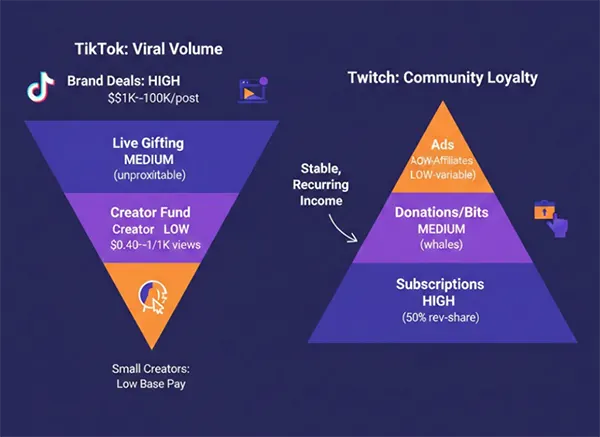
This ‘Income Pyramid’ visualization shows how streaming platforms distribute their earnings to content creators.
Understanding How TikTok Creators Earn Money
TikTok is the ultimate discovery platform. The FYP or For You Page remains the most powerful tool for turning a nobody into a famous personality overnight.
Brand Deals
This is the ‘Big Kahuna’ of TikTok income. Brands are not just looking for followers anymore; they want ‘vibe alignment.’
A single viral video can command five-figure fees if your engagement rates are healthy. This transforms casual content into a highly lucrative and sustainable professional career.
Creator Funds
The updated Creator Rewards Program has moved away from ‘pennies-per-thousand-views’ to a model that focuses more on original content over one-minute-long content. It’s better than how it was in 2022, but still not enough to buy a mansion on its own.
Did You Know?
Around 40% of TikTok’s top-earning creators make more from ‘Live Gifting’ than from the Creator Fund.
Affiliate Opportunities
With TikTok Shop fully integrated, the platform has become a giant shopping mall. Creators are now earning huge commissions by just tagging the product they are using. This allows them to use their genuine product usage to create reviews that further generate income for them.
How Twitch Monetization Works for Streamers
If you consider TikTok as a billboard, Twitch will be a private club. You don’t just watch a streamer; you hang out with them.
Subscriptions
Subscriptions are another name for stability. Streamers use their monthly subscription income to forecast their earnings.
In 2026, the 70/30 revenue split for top-tier partners functions as the optimal payment method, which helps the creators to establish their financial security and develop their business.
Donations
Top supporters use Bits and direct third-party tips to provide complete financial support to their creator’s professional career. It is not uncommon for a dedicated community of just 200 people to support a full-time creator through sheer generosity. It proves that micro-communities often yield the highest individual financial returns.
Ad Revenue Models
Twitch has leaned heavily on the ‘Incentive Programs’ that offer guaranteed monthly payouts for running specific ads, providing a safety net.
Many influencers use TikTok’s reach to encourage their fans to join Twitch streams where these diverse and reliable monetization models are fully realized.
Comparing Audience Engagement and Growth Potential
TikTok offers ‘lottery-style’ growth; you could post a video today and have 100,000 followers in the next few days. However, that audience is often fickle.
In the context of Twitch, your audience grows slowly, but the followers you get are high-quality and deeply connected to you.
It takes months to build a core group, but once it is built, the members will remain loyal to your brand through any content changes.
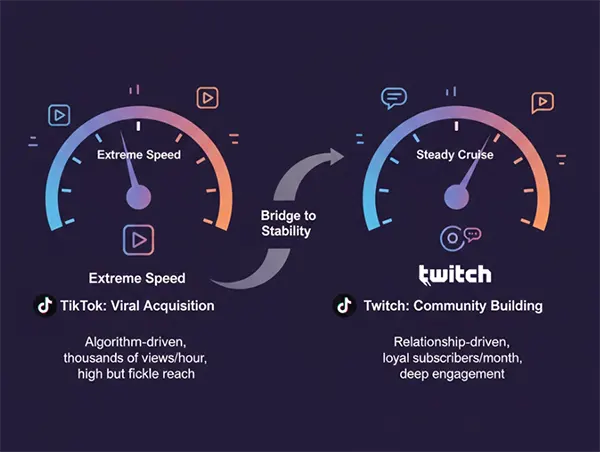
The Growth Speedometer infographic clearly highlights the two different rates at which audiences acquire new followers.
Brand Collaboration Opportunities on Both Platforms
Brands love TikTok for awareness and Twitch for conversion. On TikTok, you’re the face of a trend; whereas on Twitch, you are a trusted advisor. In the current times, influencers use TikTok as a major platform that generates traffic to their Twitch streams, which attract the most viewers.
TikTok provides creators with a way to attract new viewers through its viral content, each of which allows creators to shift raw attention towards Twitch’s engaging and active content. This dual-speed strategy transforms temporary visitors into permanent subscribers who bring high-value long-term income.
Challenges Creators Face on TikTok vs Twitch
There are certain challenges that creators face on both platforms, such as:
- You are only as good as your last viral hit. The pressure to post 3-5 times a day on TikTok can be soul-crushing.
- To stay relevant on Twitch, many streamers feel that they must be live for 40+ hours a week, which leaves very little room for their personal life.
- The intense focus on real-time feedback can make a creator’s happiness completely dependent on their view counts and comments, and affect their mental health.
Fun Fact: An average Twitch user spends over 95 minutes per day on the platform!
Final Considerations: Choosing the Right Platform for Income Goals
Ultimately, the better platform depends on what you need. It is for you to decide whether you prefer editing and storytelling (TikTok0 or live interaction and community building (Twitch).
In 2026, the wealthiest creators aren’t choosing one; they are using TikTok for reach and Twitch for revenue. The mix allows you to use both platforms for different purposes; use TikTok to find new fans quickly, while using Twitch to turn those fans into a loyal community that becomes the source of your steady income.
Frequently Asked Questions
Ques: Which platform is better for small creators?
Ques: Can I begin with both at once?
Ans: Yes, you can. However, it is better than you master one first for better results.
Ques: How many followers do I need to earn a living?
Ans: On Twitch, you need 300 subs, while on TikTok, you’ll require 500K+ followers.
Related Posts