Ans: No. AI handles the logistics, while humans handle the creative storytelling.
How AI-Powered Influencer Marketing Infrastructure Can Secure Brand Growth in 2026
 Written By Shilpi Samantray
 Reviewed By: Nitin Rathore
“AI will not replace influencers, who use AI will replace those who don’t.”
The influencer landscape has undergone a significant shift from a guessing game to a high-precision science. While 50% of workplace tasks will soon be automated, digital-first roles, including campaign management, are leading the shift, with AI already handling most routine execution.
As you navigate this digital evolution, you will find that your software platform determines whether you will achieve viral success or lose money throughout the transformation process.
This article explores how brands can achieve fast growth through AI-based infrastructure development, while maintaining essential human ties that drive sales.
Key Takeaways
Use AI to forecast the campaign’s success before spending money. Automate administrative tasks to reclaim 40% of your team’s time. Get rid of fake influence through deep sentiment and bot analysis. Build a strong foundation that supports 10x growth without much effort.
Why AI Is Transforming Influencer Marketing Strategies
People often find traditional outreach methods to be slow. AI functions as an efficiency engine that analyzes millions of data points to identify which creators will appeal to your specific target audience.
Organizations can move away from traditional methods by using automated spreadsheets that enable them to make immediate strategic changes as per current social trends.
This transition frees your team, allowing them to focus on their primary task while they create efficient brand protection strategies that use data analytics to establish authority in a crowded market.
Understanding AI Infrastructure in Influencer Marketing
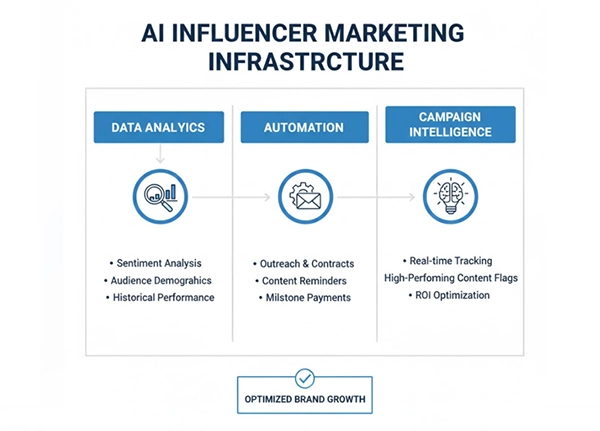
To level up, you need to understand the core pillars powering modern influencer marketing infrastructure:
- Data Analytics
The measurement system tracks more than just Facebook likes. You are looking at sentiment analysis, historical performance patterns, and audience overlap to ensure that your message reaches the right audience.
- Automation
Automation handles all steps, from initial outreach emails to contract generation, resulting in faster contract completion and workflow efficiency through reduced human errors.
- Campaign Intelligence
AI systems track your current advertising campaigns and identify successful materials that you can boost right away to maximize your advertising expenditures.
Did You Know?
AI-optimized campaigns archive 30% higher ROI than manual ones through superior creator matching.
For a detailed article on brand foundations, understanding these three pillars (in the image) is the first step toward maturity.
How AI Helps Brands Identify the Right Influencers
Looking for the perfect match now takes seconds. The AI infrastructure uses creator DNA to evaluate follower authenticity and past interactions. The advanced detection system now protects audiences from fake accounts because it recognizes hidden user interactions that demonstrate actual customer loyalty.
When an influencer’s values align perfectly with your mission, the partnership feels organic rather than forced, which is undoubtedly what modern brands should deliver to consumers. The first step to creating your ideal creator partnerships is to assemble your perfect team of creators for your company.
Fun Fact: The first 1 million-follower virtual influencer was completely coded, yet outperformed many Hollywood stars in engagement.
Building a Scalable Influencer Marketing Infrastructure
The process of scaling requires organizations to develop efficient systems enabling them to handle different campaigns without experiencing operational problems.
Tools and Platforms
Your toolkit needs a centralized hub for communication and asset management. Top-tier creators often use professional environments such as Studio Space Atlanta to ensure high-tech output.
Proper software then makes sure that delivered content is immediately tagged, stored, and ready for multi-channel distribution.
Workflow Automation Essentials
Automation is the secret sauce of scalability. Setting automated triggers for payments and reminders eliminates friction that sours influencers’ relationships.
Offering a seamless professional experience encourages creators to become long-term advocates. It not only helps you in stabilizing the presence of your brand, but also effectively reduces the future acquisition costs.
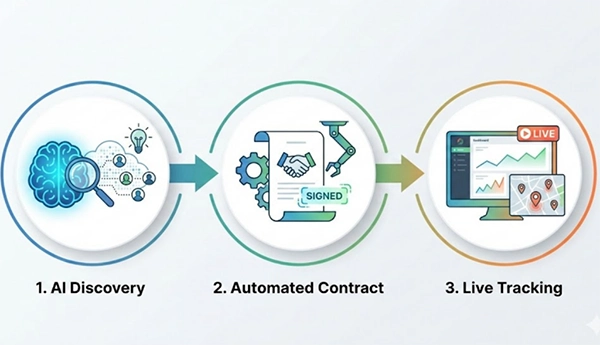
As illustrated in the image, the modern lifecycle is a seamless process moving swiftly from AI-driven discovery to real-time tracking.
Role of AI in Performance Tracking and ROI Optimization
ROI, earlier used to be a wait-and-see metric. The complete customer journey tracking from the influencer touchpoint to final purchase will become available through AI-infrastructure in 2026, via its live dashboard system.
The data indicates which creators produce beneficial results. The real-time data optimization process enables you to shift financial resources during the campaign to the most successful advertising platforms. It ensures that every expenditure will boost your financial performance.
Challenges Brands Face When Adopting AI Influencer Marketing
The AI-first remains difficult to accomplish. The introduction of advanced technologies into the current system creates several difficulties for brands.
The authenticity tap also exists, because organizations depend on AI for communication that creates a personal connection that people need to interact with influencers.
Moreover, organizations need ongoing monitoring to maintain compliance with the evolving data protection regulations while they implement security-driven tech solutions.
Future Outlook for AI-Driven Influencer Campaign Growth
Looking ahead, the future will develop a deeper bond between human creative work and AI technology. We are moving towards a future where AI has the potential to predict viral probability even before a post goes live.
Your growth in 2026 depends on your ability to embrace these tools today. Brands that invest in their digital infrastructure now will be the ones to dominate the social media platforms in the future.
Frequently Asked Questions
Ques: Is it possible for AI to make influencer content look robotic?
Ques: How do I know if an influencer’s audience is real?
Ans: AI tools analyze audience over scores, and it looks at engagement patterns that cannot be replaced by bots.
Ques: Is AI influencer marketing expensive for small brands?
Ans: No. Many SaaS platforms offer lower pricing, making AI infrastructure accessible even for startups.
Related Posts